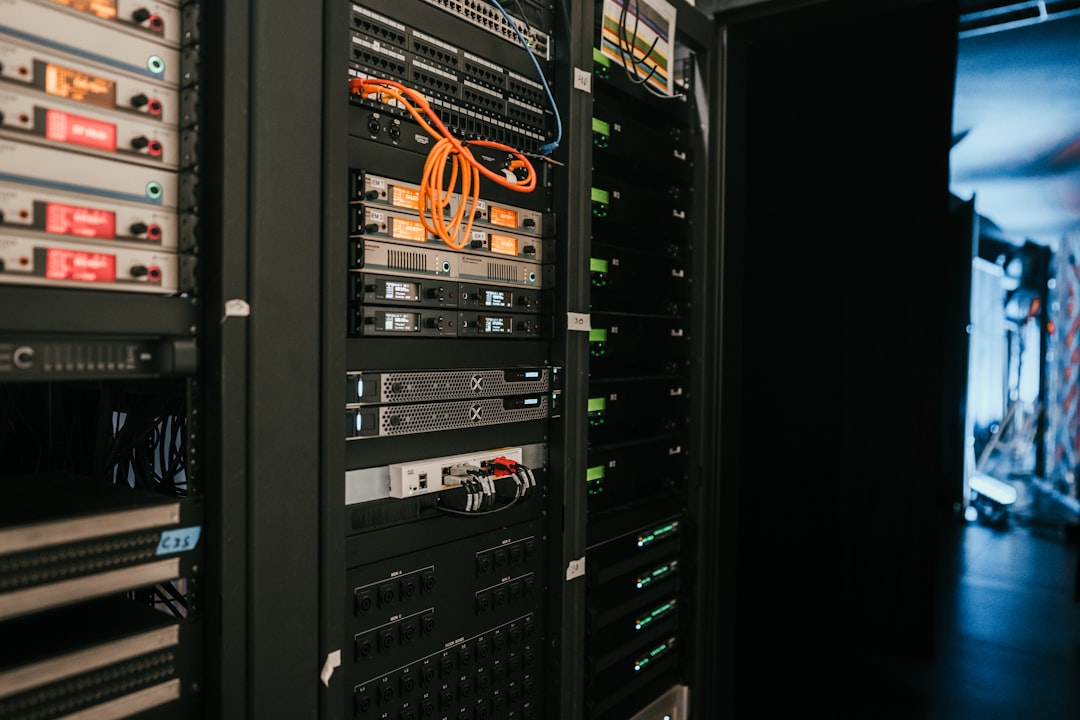
Big data centers are not going away, but they are no longer the only serious option for modern hosting. As AI inference, edge workloads, regulated data, and latency-sensitive applications become more distributed, many teams are asking whether smaller data centers can deliver a better mix of cost, security, and sustainability. The answer is not a simple yes or no. It depends on workload placement, traffic patterns, compliance requirements, and how much operational complexity your team can realistically absorb. If you are also evaluating broader infrastructure tradeoffs, our guides on hybrid storage architectures and extreme-weather data storage planning are useful companions to this decision.
In this guide, we will break down when smaller distributed hosting makes sense, where it creates new risks, and how to choose a placement model that fits your business. We will compare performance, operational overhead, energy efficiency, and resilience with practical examples rather than marketing claims. We will also connect the dots between hosting economics and infrastructure design, including DNS, backup, observability, and incident response, so you can make a decision that holds up in production.
What “smaller data centers” actually means in practice
From mega-facilities to distributed nodes
Smaller data centers are not just “less of the same.” They are often purpose-built nodes, modular deployments, regional colo pods, or micro facilities placed closer to users, devices, or data sources. They usually trade raw scale for proximity, which is why they appeal to teams running edge inference, SaaS applications with regional traffic, or internal systems that need predictable latency. The BBC’s reporting on the rise of smaller compute footprints reflects a real shift: not every workload benefits from being sent to a hyperscale warehouse before it returns a response.
That said, smaller facilities are not automatically leaner, cheaper, or greener. The operational model matters. Some are run by hyperscalers as distributed regions, some are colocated by third-party providers, and others are private on-prem or near-prem installations. Understanding the topology is essential because “distributed hosting” can mean anything from a handful of edge boxes to a national footprint of regional sites. For a related perspective on infrastructure planning under constraint, see building a zero-waste storage stack without overbuying space.
Why the conversation changed in 2026
Three trends pushed smaller sites into the spotlight. First, latency-sensitive applications became more common, especially with real-time AI, collaboration tools, and device-driven workloads. Second, power and land costs made giant facilities harder to justify in some metros. Third, sustainability reporting and carbon accounting became more visible in procurement decisions. As organizations attempt to reduce waste and overprovisioning, smaller and more distributed designs deserve a serious look.
There is also a philosophical change underway. Many teams are no longer asking, “How do we centralize everything?” Instead, they ask, “Where should this workload live to meet SLOs at the lowest total cost and risk?” That is the right framing. If you are trying to predict whether your infrastructure choices can support growth without excess, our article on creative automation and operations efficiency offers a useful lens on reducing repetitive work before scaling infrastructure.
Cost: cheaper hardware, or just a different bill?
Capex versus opex changes the math
The biggest mistake teams make is assuming that smaller means cheaper. In reality, smaller data centers often reduce one type of cost while increasing another. You may spend less on building shell space, cross-connect sprawl, or giant utility feeds, but more on per-unit compute, redundant tooling, and remote hands. If your provider charges a premium for regional placement, you may pay more per rack or per core than you would in a hyperscale location. The total cost of ownership depends on how efficiently you can utilize capacity.
That is why workload consolidation matters. A small facility can be economical if you run a steady, high-value workload with little burstiness. It becomes expensive if you treat it like overflow capacity for spiky demand and leave much of it idle. Procurement teams should compare not only list prices but also hidden charges such as outbound transfer, storage replication, power headroom, and maintenance labor. A similar hidden-cost mindset applies in other buying decisions too, as explained in the hidden fees playbook.
Distribution can reduce network spend
One of the strongest economic arguments for smaller distributed hosting is network efficiency. When users are geographically dispersed, serving them from a closer regional node can reduce transit costs, improve cache hit rates, and lower latency-related support tickets. For applications that stream content, sync data, or perform real-time inference, shorter paths can lower pressure on backhaul links. This matters even more when your architecture includes load balancers, CDN origin pulls, or geo-aware API gateways.
Still, distributed hosting introduces duplication. You may need more local copies of software, more backups, more monitoring endpoints, and more spare capacity than you would in one central site. The cost benefit only appears when the reduced latency and network spend exceed the overhead of managing multiple sites. If you are planning procurement around uncertain demand, it is wise to borrow techniques from evaluating premium-domain purchases: compare the full lifecycle cost, not just the headline price.
Table: cost and operating tradeoffs by facility type
| Facility type | Typical cost profile | Best fit workload | Main advantage | Main drawback |
|---|---|---|---|---|
| Hyperscale mega-facility | Lowest unit cost at massive scale; high minimum commitment | Large, steady, global platforms | Best economies of scale | Less geographic proximity |
| Regional colocation pod | Moderate cost; flexible contracts | SaaS, API, and business apps | Better latency balance | Management complexity rises |
| Edge micro data center | Higher unit cost; low footprint | Inference, IoT, local processing | Very low latency | Limited capacity and staffing |
| On-prem private room | High labor and facilities overhead | Regulated or specialized systems | Maximum control | Harder to scale efficiently |
| Hybrid distributed stack | Variable, depends on orchestration | Mixed enterprise workloads | Placement flexibility | Tooling and governance burden |
Latency and performance: the strongest case for smaller sites
Why proximity still wins for certain apps
For many modern applications, milliseconds matter. If a workload serves live dashboards, AI responses, financial transactions, gaming sessions, or device telemetry, sending every request to a distant mega-facility can create real user friction. Smaller data centers placed closer to users can reduce RTT, improve interactive performance, and make error budgets easier to protect. This is especially important when you cannot fully hide latency with caching or client-side rendering.
There is a special case here: inference-heavy AI. The BBC piece notes growing interest in on-device and smaller-footprint processing, but many current devices still lack the compute to fully replace remote resources. In the meantime, regional inference nodes can provide a useful middle ground. They offer enough local processing to reduce round-trip times without forcing every user to connect to a central AI cluster. For teams exploring modern AI deployment patterns, which AI assistant is actually worth paying for in 2026 can help you think about feature cost versus performance value.
Placement strategy beats raw horsepower
Many teams overfocus on CPU count, GPU count, or storage type and underfocus on placement strategy. Workload placement is the art of deciding where each service should run based on user geography, data gravity, compliance, and dependency chains. A latency-sensitive API can live in a small regional node, while its analytics warehouse remains centralized. This split often creates a better user experience than trying to run everything in one giant facility.
To make placement decisions rationally, map each workload against three axes: response-time sensitivity, statefulness, and regulatory impact. Stateless web tiers are usually easy to distribute. Stateful databases, message queues, and storage systems need more caution because replication and failover can become costly. If you need a practical reference for building robust distributed systems, our guide on production-ready DevOps stacks is a useful framework for thinking about automation and reliability.
Security: smaller does not automatically mean safer
Reduced attack surface, but more sites to protect
A small data center can improve security in some contexts because there is less physical footprint, fewer people with access, and fewer sprawling dependencies. Sensitive workloads may benefit from local segmentation, tighter badge control, and reduced exposure to shared-meeting-point attack paths. In regulated industries, a compact facility can make audits easier because the control environment is simpler to document and verify. That simplicity is valuable when you need clear evidence of who accessed what and when.
However, distributed hosting increases the number of locations you must secure. Each extra site adds physical risk, remote management exposure, firmware management, identity controls, and incident response surfaces. A well-defended central facility is often safer than five loosely managed regional nodes. If your team cannot consistently patch, inventory, and monitor each location, the security gain of small data centers can disappear quickly. For regulated storage and control-plane design, it is worth revisiting offline-first document workflow architecture because the same principles of access minimization apply.
Data locality and compliance are real advantages
Smaller distributed sites can simplify compliance when laws or contracts require data to remain in a specific region. That is especially useful for healthcare, public sector, financial services, or cross-border SaaS providers. A regional node can keep sensitive records local while less sensitive traffic is routed elsewhere. This design reduces legal risk and can make vendor assessments easier because you can show deliberate geographic separation.
Still, do not confuse locality with security by default. A smaller site can still be compromised by weak IAM, poor secret handling, or an exposed management interface. The best model combines segmentation, strong MFA, hardware root of trust, encrypted replication, and zero-trust administrative access. If you are evaluating trust boundaries and compliance tradeoffs, designing HIPAA-compliant hybrid storage architectures on a budget offers a practical mindset for balancing control and cost.
Pro tip: security improves when you reduce exceptions
Pro Tip: Distributed infrastructure becomes safer when every site runs the same hardened baseline, patch cadence, logging standard, and incident playbook. Security drift, not geography, is usually what creates the biggest risk.
In other words, the question is not “small versus big” so much as “standardized versus ad hoc.” Smaller facilities can be excellent if they are templated, monitored, and automatically remediated. They can be a disaster if each one becomes a snowflake environment maintained by a different contractor. Teams that have strong automation and disciplined change control are best positioned to benefit from distributed security. For governance and control, designing AI-powered moderation pipelines is a surprising but relevant example of how control logic depends on carefully managed data paths.
Sustainability and energy efficiency: where the narrative gets complicated
Smaller can be greener, but only if utilization is high
The sustainability case for smaller data centers usually rests on one of two arguments: they waste less space and they can reuse heat more effectively. A compact site may be easier to integrate with district heating, industrial processes, or building-level reuse projects. If you have ever seen a small facility warm a swimming pool or a home, you know the concept is real. When waste heat is actually captured, distributed compute can become part of a broader energy optimization strategy instead of just a load on the grid.
But the green story is not automatic. Many small sites suffer from lower power usage effectiveness because they cannot match the cooling efficiency, procurement leverage, or utilization ratios of hyperscale facilities. If a tiny site sits partially empty or relies on inefficient legacy cooling, it can consume more energy per unit of useful compute than a giant optimized campus. The right question is not whether the facility is small; it is whether it is operated efficiently and placed where its heat, power, and workload can be used productively.
Energy efficiency depends on workload shape
Some workloads are naturally suited to smaller facilities because they are bursty, local, or seasonal. Others, like large-scale batch training, may benefit from large centralized clusters with better power density and easier liquid cooling deployment. In general, training big models favors scale, while inference and local processing often favor distribution. That is why many organizations are moving toward a two-layer design: central clusters for heavy compute and smaller nodes for latency-sensitive serving.
This strategy aligns with broader operational energy principles seen in other industries. If you want a useful parallel, read strategic energy management lessons from the sports arena, where load timing, utilization, and efficiency planning mirror infrastructure decisions. Energy savings usually come from matching supply to actual demand, not simply from choosing a smaller building.
Waste heat reuse can offset carbon intensity
One of the most compelling sustainability advantages of small data centers is heat reuse. Because the installation is compact, it is often easier to pipe waste heat into a nearby building, greenhouse, water-heating loop, or district network. This can transform a power cost into a useful byproduct. In climates with heating demand, the economics can be surprisingly attractive when the compute is already needed.
That said, heat reuse works only when there is a local sink for the energy. If no nearby facility can absorb the thermal output, you are simply paying to move heat around inefficiently. Sustainability should be measured with actual lifecycle numbers: facility PUE, carbon intensity of the grid, renewable procurement, and the percentage of heat recovered. If you are budgeting infrastructure with sustainability in mind, our article on energy-efficient appliances shows the same principle: efficiency wins only when used consistently and at the right scale.
Reliability and resilience: what happens when the lights go out?
Distributed architecture can eliminate single points of failure
One major benefit of smaller data centers is geographic resilience. If you split workloads across regions, a fire, flood, utility issue, or fiber cut at one site does not necessarily take everything offline. This makes distributed hosting valuable for businesses that need continuity across disasters or local outages. The architecture is especially powerful when combined with DNS failover, stateless app tiers, and replicated object storage.
At the same time, resilience is not free. The more sites you have, the more likely one will fail in a way that affects your control plane, routing, or configuration management. You can end up trading a large failure domain for multiple smaller ones that are harder to orchestrate. The lesson is to design for graceful degradation rather than perfect uptime everywhere. If seasonal or disaster-related planning is relevant to your team, data storage and management solutions for extreme weather events provides a helpful resilience mindset.
Operational maturity matters more than facility size
Reliability depends on discipline: runbooks, monitoring, spare capacity, tested restore procedures, and clear ownership. A large data center with mature automation can outperform a smaller one that lacks remote hands, inventory controls, and alert hygiene. Conversely, a small, well-managed node can outperform a sprawling site when it is built for a specific purpose and monitored closely. The deciding factor is not square footage but operational maturity.
When comparing providers, ask how they handle patching, replacement parts, power redundancy, and hardware lifecycle. Ask whether they can support your restore time objective if a local failure occurs. Also test your own assumptions by running chaos drills, failover rehearsals, and backup restores before you move production traffic. Good resilience planning has much in common with system update troubleshooting: you want reproducible steps, not optimism.
Workload placement framework: how to decide what moves
Best candidates for smaller distributed hosting
Smaller data centers are strong fits for workloads with local demand, low-to-moderate state, and high sensitivity to latency. Examples include content delivery origins, API gateways, read-heavy application front ends, branch-office virtualization, IoT aggregation, AI inference, and regional caching layers. They are also useful when compliance forces data residency or when network costs are outpacing compute costs. If your business serves distinct regions, you can often reduce user complaints by putting the nearest services closer to the user.
Start by moving low-risk workloads first. A good sequence is web front ends, static asset caches, edge APIs, and then carefully chosen application services. Leave databases, primary identity systems, and brittle legacy workloads centralized until you have evidence that replication and failover are stable. For migration planning that minimizes disruption, pair this guide with reviving legacy apps in cloud streaming and map dependencies before moving anything live.
Workloads that usually stay centralized
Not every workload belongs in a small site. Heavy training jobs, large transactional databases, long-retention archives, and systems with complex third-party dependencies are often better kept in larger centralized facilities. These workloads benefit from scale, better storage economics, and simpler network topology. If you move them too early, you can increase cost and operational fragility without improving user experience.
Centralization also makes sense when your team is small and your incident response maturity is still developing. Managing many local nodes requires strong tooling for observability, secrets, patching, and deployment orchestration. If you lack that foundation, smaller data centers can become a distraction. Before changing architecture, review your deployment pipeline and automation posture, as covered in platform preparation for hardware uncertainty.
Simple decision matrix
Use this quick rule: if the workload is latency-sensitive, geographically distributed, and moderately stateless, smaller data centers are worth testing. If the workload is compute-heavy, stateful, or highly centralized by design, keep it in a larger facility unless there is a clear regulatory or business reason not to. Add a final filter for operational maturity: if you cannot automate deployment and recovery, do not add sites just because they look modern. A distributed architecture should reduce user pain, not create a new category of pager alerts.
For broader strategic thinking, it helps to read how AI search visibility turns into link-building opportunity, because the same principle applies here: operational leverage comes from systems that multiply your team’s output, not from complexity for its own sake.
Implementation checklist for teams considering a move
Step 1: Profile the workload, not the hype
Before you migrate anything, collect evidence. Measure request latency by region, bandwidth consumption, cache hit rates, database write volume, peak concurrency, and failover sensitivity. Then identify which metrics actually improve when the service moves closer to users. This keeps the decision grounded in data instead of vendor marketing.
Once you have baseline numbers, define success criteria. For example, you might require a 30% reduction in p95 latency, no increase in incident rate, and a lower egress bill before expanding the rollout. This makes the project measurable and prevents false wins from being celebrated too early. If you are interested in practical planning under budget pressure, structuring a budget under constraints is a surprisingly useful budgeting analog.
Step 2: Standardize observability and backups
Distributed systems live or die by observability. Every site should export the same logs, metrics, and traces into a centralized platform. Backups must be tested, immutable where possible, and easy to restore from a remote site. If you can’t explain where your backup lives and how long recovery takes, you are not ready to add a second or third node.
Remember that resilience is also a process issue. Run tabletop exercises, document escalation paths, and verify who has access to what. Smaller sites can reduce physical complexity, but they increase the importance of process consistency. The pattern is similar to lessons from contractor vetting checklists: a tight process is what keeps the project from drifting into expensive mistakes.
Step 3: Deploy in phases
Do not move a core workload all at once. Start with a canary region, shift a small share of traffic, validate performance and error rates, and only then expand. Use DNS TTLs and weighted routing intelligently so you can roll back quickly if the smaller site underperforms. In a distributed design, rollback capability is as important as rollout capability.
After each phase, compare actual results with your hypothesis. Did latency improve for the target region? Did support tickets drop? Did energy usage or egress cost move in the right direction? If not, stop and reassess instead of forcing the architecture to justify itself. Incremental migration is how you avoid turning a promising design into a production incident.
When smaller data centers are the right choice
Clear business and technical signals
Move workloads to smaller data centers when you need lower latency, regional compliance, selective decentralization, or better local energy reuse. They are especially compelling when user geography is broad but each region has manageable traffic density. If your workloads are modular and your team already has strong automation, the distributed model can improve both user experience and resilience. In those cases, the small-site strategy is not a compromise; it is a design advantage.
They also make sense when central sites become bottlenecks for cost or sustainability. A small regional site can absorb specific functions more efficiently than a giant campus doing everything for everyone. Just remember that the value comes from matching infrastructure to workload, not from the size of the building. For teams that care deeply about operational planning, how tech and AI jobs cluster can even hint at where talent and infrastructure demand are moving.
When to stay large
Stay with large facilities when you need the lowest unit cost, heavy compute density, or simpler governance. A centralized environment is often easier to secure, monitor, and staff, especially for organizations with limited platform engineering maturity. If your current architecture already delivers good latency and your biggest pain point is operational complexity, adding sites may not help. The better investment might be automation, caching, or storage optimization instead.
The best infrastructure strategy is usually hybrid. Keep the expensive, stateful, or deeply centralized pieces in large facilities, and move the latency-sensitive or locality-sensitive layers outward. That balance gives you room to scale without forcing every workload into the same design template. If you approach the decision this way, you are not choosing between small and big; you are designing a system that uses both intelligently.
FAQ: smaller data centers and distributed hosting
Are smaller data centers always more energy efficient?
No. Smaller sites can be more efficient when they are highly utilized, well cooled, and designed for heat reuse, but they can also be less efficient than large optimized campuses. Energy efficiency depends on utilization, cooling design, grid mix, and how much compute the site is actually delivering. A half-empty small facility is usually not a sustainability win.
What workloads benefit most from distributed hosting?
Latency-sensitive web apps, API layers, regional caches, AI inference, IoT processing, and branch-office services often benefit the most. These workloads gain value from proximity and can tolerate some decentralization. Stateful databases and batch training workloads usually need more caution.
Does moving to smaller sites improve security?
It can, especially when physical access control and data locality are important. But security also gets harder because every new site needs patching, monitoring, and consistent policy enforcement. A distributed design is only safer if the controls are standardized and automated.
How do I know if the cost savings are real?
Model total cost of ownership, not just rack or server price. Include egress, replication, remote hands, spare parts, software licensing, observability, backup storage, and staff time. If the gain only appears in one cost line but not in the full operating picture, the savings may be illusory.
Should small businesses use smaller data centers?
Sometimes, but not by default. If your traffic is regional and your application is simple, a small colo or edge provider can be a great fit. If your team is small and your app is stateful or compliance-heavy, a simpler centralized platform may be a better starting point.
What is the best first step before migrating?
Measure workload behavior by region and define a pilot. Move only a low-risk service first, validate latency and error rates, and make sure rollback is easy. Successful distributed hosting usually begins with a narrow, measurable win rather than a full migration.
Bottom line: should you move workloads to smaller data centers?
The strongest case for smaller data centers is not cost alone, and not sustainability alone, and not even security alone. The real argument is alignment: placing workloads where they perform best, cost least to operate, and create the least unnecessary waste. When a workload is latency-sensitive, geographically distributed, or constrained by local data rules, smaller facilities can be a smart and modern answer. When a workload is compute-heavy, highly stateful, or difficult to manage, large facilities still dominate on simplicity and economies of scale.
Think of this as infrastructure design, not infrastructure fashion. Use large facilities for what they do best, use distributed nodes where locality matters, and let automation decide how the system behaves under failure. If you evaluate workloads carefully and migrate in phases, smaller data centers can become a strategic advantage rather than a risky experiment. The best hosting architecture is the one that makes your application faster, safer, and easier to run over the long term.
Related Reading
- Designing HIPAA-Compliant Hybrid Storage Architectures on a Budget - Learn how to balance compliance, control, and cost in hybrid environments.
- Winter Is Coming: Data Storage and Management Solutions for Extreme Weather Events - See how to plan for outages, cold snaps, and resilience risks.
- From Qubits to Quantum DevOps: Building a Production-Ready Stack - A strong framework for automating complex infrastructure safely.
- Reviving and Revitalizing Legacy Apps in Cloud Streaming - Useful if your migration must account for older app dependencies.
- How to Build a Zero-Waste Storage Stack Without Overbuying Space - A practical guide to avoiding unused capacity and wasted budget.