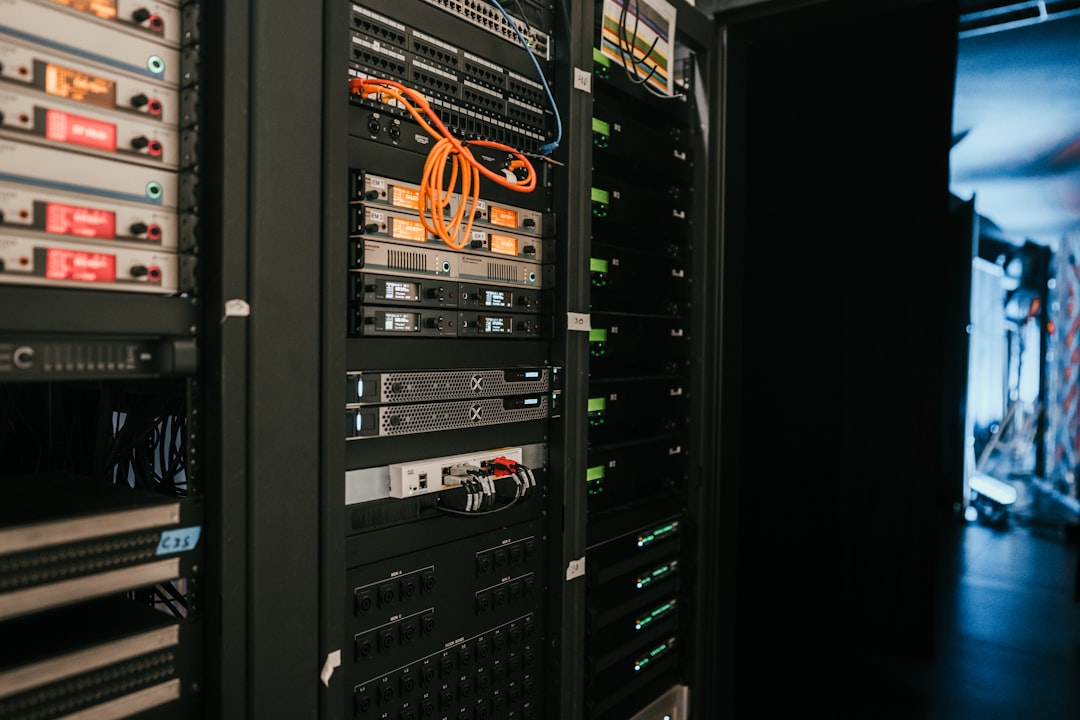
If you run production websites, SaaS apps, client portfolios, or high-traffic WordPress installs, “everything is fine” is not a monitoring strategy. A serious real-time monitoring stack should show you what is happening right now: server uptime, request latency, error spikes, saturation, and the weird edge cases that precede a full incident. The goal is to combine server logs, hosting metrics, and alerting into a single operational view so you can respond before users notice. This guide treats monitoring like a live control room, not a static report, and it builds on the same principles used in predictive analytics and real-time data logging: collect continuously, analyze immediately, and act with confidence.
For hosting teams, the difference between guessing and knowing often comes down to whether you can correlate application behavior with infrastructure signals. A spike in 5xx errors may be an app deploy issue, a CPU bottleneck, a TLS handshake problem, or simply a bad upstream dependency. That is why a modern dashboard should not just display charts; it should support endpoint and connection auditing-style visibility, plus resilience engineering thinking. If your stack is built well, your alert will explain what changed, where it changed, and how urgent it is.
1. Define What “Health” Means for Your Hosting Environment
Start with the user experience, not the server
Many dashboards fail because they measure the wrong things. CPU and RAM are useful, but a host can look “healthy” while users still experience slow page loads, checkout failures, or API timeouts. Start by defining the customer-visible outcomes you care about: can the homepage load, can the API respond within your SLO, can SSL complete, and can the database support normal traffic? This is the same discipline found in hosting option analysis: you choose indicators that map to business outcomes, not vanity metrics.
Choose a few leading and lagging indicators
Use leading indicators to catch problems early, such as rising p95 latency, increasing queue depth, disk IO wait, or growing error rate on a single route. Use lagging indicators to confirm user impact, such as downtime, 5xx bursts, or failed transactions. A practical dashboard usually includes uptime checks, response time percentiles, saturation metrics, and log-derived error counts. If you have a WordPress fleet, these indicators should also capture plugin-related errors and cache-hit behavior, which is why many teams pair their dashboard with resilient app ecosystem patterns.
Design for decision-making, not decoration
The best dashboards answer three questions instantly: is something broken, where is it broken, and what should I do next? Every graph should have a purpose. If a panel does not inform an action, remove it or demote it to a drill-down page. This approach is similar to turning messy signals into actionable plans, much like volatility-to-plan workflows in analytics-heavy domains.
2. Build the Data Pipeline: Logs, Metrics, and Events
Collect logs as structured events, not free-form text
Raw logs are hard to use at speed. Convert them into structured events with fields like timestamp, host, service, request_id, route, status_code, latency_ms, and error_class. Once logs are structured, you can filter for spikes, correlate errors with deployments, and aggregate by route or region. The same “continuous capture” logic used in real-time data logging applies here: log every important event as it happens, then make it queryable within seconds.
Use metrics for trend visibility and logs for explanation
Metrics tell you there is a problem; logs tell you why. Metrics are ideal for time-series data such as response latency, request throughput, memory pressure, cache hit rate, and disk usage. Logs provide request-specific context, stack traces, and error messages. A strong monitoring stack uses both. For example, if latency jumps on a specific endpoint, metrics can show the timing pattern while logs reveal whether the cause is a database timeout, a third-party API failure, or a bad release. This pairing resembles how predictive models combine historical data with external context to explain outcomes.
Stream events through a real-time backbone
When you need genuinely live observability, push logs and events through a streaming layer before they land in storage. Tools in the Kafka, Flink, or similar ecosystem can normalize, enrich, and route events in motion. That gives you a chance to tag incidents, detect anomalies, and trigger webhooks immediately. Streaming analytics is especially useful during deployments, traffic surges, or outages because it reduces the delay between signal and action, much like a control system rather than a report generator.
3. Pick a Monitoring Stack That Fits Your Scale
Small team stack: simple, fast, and low-maintenance
If you manage a few servers or a modest hosting footprint, your stack can be lean. A common pattern is a metrics collector, a time-series database, a dashboard layer, and a log search tool. The key is to avoid overengineering while still preserving the ability to correlate data. Small teams often succeed with a setup that resembles a lightweight industrial monitoring model: reliable ingestion, straightforward storage, and immediate visualization. In that spirit, think of your stack as operational infrastructure rather than a software project.
Growing stack: separate ingest, storage, and alert logic
As your traffic grows, separate ingestion from analysis. Logs should be able to burst without taking down your dashboard. Metrics should remain queryable even during incident storms. Alert evaluation should run independently from long-term retention. This architecture is similar to how real-time analysis systems decouple acquisition from processing so the pipeline does not collapse under load. It also keeps your team from missing critical symptoms when the platform itself is under stress.
Enterprise stack: segment by service, tenant, or region
In larger environments, one dashboard is not enough. You may need separate views for edge nodes, app clusters, databases, background workers, and customer-facing services. Segmenting by region or tenant helps isolate noisy neighbors and locate failures faster. Teams that operate global footprints often borrow ideas from high-reliability surveillance and distributed logistics: continuous coverage across multiple zones with strong local observability.
4. Metrics That Matter for Hosting Uptime and Latency
Core system metrics
At minimum, your dashboard should track CPU load, memory usage, disk capacity, disk IO wait, network throughput, and open connections. On cloud hosts, also monitor burst credits, instance health checks, and node-level throttling. These metrics reveal whether a slow site is actually under resource pressure or whether the issue sits higher in the stack. If you have a backup-power or on-prem dependency, the operational mindset is similar to planning for a backup power source: resilience depends on knowing which subsystem will fail first.
Service-level metrics
Service metrics translate infrastructure into user impact. Track request rate, success rate, p50/p95/p99 latency, error percentage, and saturation by endpoint. Latency percentiles matter because averages hide tail pain, and tail pain is what users remember. If a homepage is fast for 95% of requests but occasionally times out for 5%, the average will lie to you. That is why latency should be a first-class signal in your dashboard and alerting strategy.
Business-impact metrics
For commercial hosting, tie technical metrics to customer outcomes. Examples include failed checkouts, contact-form submission errors, login failures, API job backlog, and SLA breach risk. These are the numbers executives understand and engineers can act on. If your service supports client sites, this also helps prioritization: a one-minute outage on a high-revenue app is more urgent than a cosmetic issue on a brochure site. The same principle applies when comparing services in any commercial category, similar to how buyers evaluate value in value-based comparisons.
5. Build the Dashboard Layout Like an Incident Commander
Top row: are we up right now?
Start with a compact incident summary at the top: overall uptime, current error rate, current p95 latency, active incidents, and last deployment time. This gives everyone a quick read before they drill into the details. Use clear status indicators, but avoid oversimplifying into green/yellow/red alone. A service can be green and still be trending toward trouble, so pair status colors with trend arrows or sparklines.
Middle row: where is the problem?
Show breakdowns by service, region, host, and endpoint. If a specific server is misbehaving, you want that visible without hunting. If a cache tier is healthy but the app tier is not, the dashboard should make that obvious. Use grouping and filtering to isolate anomalies quickly, and make sure you can pivot from a macro view to a single request trace. This kind of structured visibility mirrors the way analysts move from broad trends to focused evidence in predictive analytics.
Bottom row: what changed?
The final zone should show deployment markers, config changes, dependency failures, and alert history. Many incidents are “mystery outages” only because the dashboard hides the trigger. Time alignment matters: a spike in errors at 14:03 and a deployment at 14:01 are probably related. If you layer your change log directly over metrics, you shorten mean time to detect and mean time to repair dramatically. For teams that ship frequently, this view becomes indispensable, especially when paired with release-risk analysis thinking around upstream dependencies.
6. Alerting: Thresholds, Anomaly Detection, and Escalation
Use threshold alerts for known failure modes
Threshold alerts are the simplest and often the most reliable. Examples: CPU above 90% for 10 minutes, error rate above 2% for 5 minutes, disk usage above 85%, or uptime probe failures from multiple regions. These should be reserved for conditions that are clearly actionable. If you over-alert on every fluctuation, engineers learn to ignore the system, which is operationally dangerous.
Add anomaly detection for unknown unknowns
Thresholds are not enough for modern systems because not every failure looks dramatic at first. Anomaly detection can flag unusual latency patterns, sudden traffic drops, new error signatures, or mismatched request distributions. This is where streaming analytics shines: it can compare live behavior to historical baselines and highlight outliers within seconds. That same logic is why predictive systems are valuable in other domains, such as forecasting from historical patterns and live operational analysis.
Route alerts intelligently
Define alert routing by severity and ownership. A database timeout should go to the platform or DBA on call, while checkout failures should go to the app team and incident commander. Include deduplication, suppression windows, and escalation policies so the on-call person gets the right signal at the right time. Good alerting is about precision, not volume. If you want your dashboard to support operational excellence, it should behave less like a noise machine and more like a trained dispatcher.
7. Correlate Logs and Metrics During an Incident
Use shared IDs for full traceability
If your logs and metrics are not connected by request IDs, trace IDs, or session IDs, you will waste time guessing. Shared identifiers let you follow a single request from edge to app to database. During an incident, that reduces the diagnosis path from broad scanning to exact evidence. This practice is the observability equivalent of verifying endpoint relationships before rollout, similar in spirit to network auditing before security deployment.
Overlay deploys, incidents, and traffic
Put deployment markers and incident annotations on the same time axis as traffic, latency, and error graphs. If the graph changes immediately after a release, you have a fast clue. If the same symptom appears only under heavy traffic, the problem may be capacity-related. If it appears on one region only, you may be looking at an upstream or routing issue. This is why dashboard design must support correlation, not just observation.
Document the triage path
During the first 15 minutes of an incident, teams should ask: what changed, what’s broken, where is it failing, and what’s the blast radius? If your dashboard is built correctly, those answers are visible without switching tools. It should also support after-action review. Retained logs and metric history give you the evidence needed for postmortems and for tuning future alert thresholds. Good monitoring therefore improves not only uptime, but organizational memory.
8. Practical Step-by-Step Implementation Plan
Step 1: instrument your services
Add application metrics, structured logging, and health endpoints to every critical service. Make sure your app emits response times, error classes, dependency status, and resource usage. For web apps, track frontend and backend failures separately so you can distinguish network issues from application errors. If you support multiple deployment models, this approach also helps standardize visibility across environments.
Step 2: centralize logs and time-series data
Ship logs to one place and metrics to another place that is optimized for time-series queries. Keep retention tiers: hot for recent incident work, warm for routine debugging, cold for historical analysis. Index the fields that matter most: service, host, route, status code, and request ID. Centralization reduces blind spots and makes it possible to compare services using the same operational language.
Step 3: wire in alert rules and dashboards
Build a top-level dashboard for executives and responders, then deeper dashboards for engineers. Set alerts for critical failure conditions and add anomaly detection for leading indicators. Test the entire chain with synthetic incidents so you know the system fires when it should. This disciplined rollout is similar to how teams stage a rollout for a new platform or protocol: controlled, measured, and validated in production-like conditions.
9. Tooling Comparison: What to Use for Each Layer
Below is a practical comparison of common building blocks for a real-time hosting health dashboard. The right choice depends on team size, retention needs, and how much operational complexity you can support. In many cases, the winning stack is not the most advanced stack; it is the one your team can run consistently under pressure.
| Layer | Typical Options | Best For | Strengths | Tradeoffs |
|---|---|---|---|---|
| Log ingestion | Fluent Bit, Vector, Logstash | Centralizing server logs | Flexible routing, filtering, enrichment | More tuning as volume grows |
| Streaming backbone | Kafka, Redpanda, Pulsar | High-volume streaming analytics | Durable event transport, replay, decoupling | Operational overhead |
| Metrics storage | Prometheus, VictoriaMetrics, TimescaleDB | Hosting metrics and alert rules | Fast time-series queries, ecosystem support | Retention planning required |
| Visualization | Grafana, Kibana, Metabase | Dashboard building | Flexible panels, alert integration | Can become cluttered if unmanaged |
| Anomaly detection | Built-in rules, ML-based baselines, custom jobs | Spikes, drops, and unusual patterns | Catches unknown issues faster | False positives if not tuned |
For teams that need a practical architecture, start with one log pipeline, one metrics store, one dashboard, and one alerting engine. Add a streaming layer only when scale, replay needs, or multi-system correlation justify it. This keeps the initial implementation manageable while preserving a path to sophistication.
10. Operations, Governance, and Continuous Improvement
Tune dashboards using incident reviews
After every incident, ask which signals were missing, which were noisy, and which were too slow. Add the missing ones, remove clutter, and tighten alert thresholds where needed. Monitoring improves when it is treated as a living system rather than a one-time setup. This iterative mindset echoes the way businesses refine predictive systems after validation and testing.
Protect alert quality with clear ownership
Every metric should have an owner, every alert should have an escalation path, and every dashboard should have a purpose. If nobody owns a panel, it tends to become stale. If an alert does not map to a response, it becomes background noise. Teams that maintain clean operational ownership tend to respond faster and make fewer mistakes under pressure.
Keep an eye on cost and retention
Observability can get expensive if you store too much at high resolution forever. Use sampling where appropriate, tiered retention for logs, and downsampling for long-term metrics. Retain enough detail to do root-cause analysis, but avoid paying premium storage rates for data you will never query. The financial discipline here is similar to making smarter decisions in other buying contexts, such as evaluating hidden costs and value tradeoffs in cost-sensitive purchases.
Pro Tip: The fastest way to improve an operations dashboard is to add deployment markers, request IDs, and percentile latency views. Those three changes alone often cut investigation time dramatically because they connect change, symptom, and scope.
11. A Real-World Monitoring Workflow You Can Copy
Normal state
During normal operation, your dashboard should show clean uptime, stable latency percentiles, healthy error rates, and predictable log volume. The team should glance at it during standups, not stare at it all day. Normal state is where you validate that the system is still trustworthy and that the recent changes are not causing silent regressions.
Degradation state
When latency creeps up or error counts rise, the dashboard should narrow the search space immediately. Look at the affected service, route, region, and recent change history. Use logs to validate whether the issue is isolated or systemic. If the pattern is consistent with a known bottleneck, you can apply a runbook response; if it is unfamiliar, escalate to investigation and capture evidence for the postmortem.
Incident state
When users are affected, the dashboard should support rapid command-and-control. Identify blast radius, stabilize the service, and communicate status. The best dashboards make it easy to answer whether the outage is still spreading, whether mitigations are working, and whether the system is recovering. Afterward, use the collected data to refine anomaly detection, alert thresholds, and deployment safety checks.
Frequently Asked Questions
What is the difference between logs, metrics, and alerts?
Metrics summarize system behavior over time, logs provide event-level detail, and alerts notify you when a condition needs action. In a real-time monitoring stack, metrics reveal trends, logs explain the cause, and alerts surface the problem fast enough for intervention.
Do I need streaming analytics for a small hosting environment?
Not always. Smaller environments can often use direct log shipping and metric scraping without a full streaming layer. Streaming analytics becomes valuable when you need replay, high-volume correlation, or faster anomaly detection across many services.
What are the most important metrics for hosting uptime?
Start with uptime probe success, error rate, p95/p99 latency, CPU load, memory pressure, disk IO wait, and disk capacity. Add application-specific metrics such as login failures, checkout failures, queue depth, or cache hit rate based on what your users actually feel.
How do I reduce alert fatigue?
Limit alerts to actionable conditions, use deduplication and suppression windows, route alerts by ownership, and remove anything that does not lead to a clear response. It also helps to use anomaly detection sparingly and tune it based on real incident history.
What is the fastest way to improve an existing dashboard?
Add deployment markers, request IDs, latency percentiles, and service-by-service breakdowns. Those additions immediately improve correlation between symptoms and recent changes, which is often the biggest gap in a struggling dashboard.
How much historical data should I keep?
Keep enough to compare current behavior with normal baselines and to investigate recurring incidents. Many teams use hot storage for days or weeks, warm storage for months, and lower-cost archives for long-term trending and compliance.
Conclusion: Build for Speed, Correlation, and Trust
A real-time hosting health dashboard is more than a pretty display of uptime. It is an operational system that ingests server logs, summarizes hosting metrics, detects anomalies, and turns that data into fast decisions. The strongest setups combine classic threshold monitoring with streaming analytics so they can detect new failure modes before they become outages. That is the practical path to reliable alerting, clearer incident response, and better user experience.
If you are designing from scratch, start simple: structured logs, percentile latency, uptime checks, and a clean dashboard. Then add correlation, anomaly detection, and richer alert routing as your traffic and complexity grow. When you treat observability as a live feedback loop, your hosting stack becomes easier to operate, easier to scale, and much harder to surprise.
Related Reading
- How to Audit Endpoint Network Connections on Linux Before You Deploy an EDR - A practical guide to connection visibility and pre-deployment validation.
- Real-time Data Logging & Analysis: 7 Powerful Benefits - Learn how continuous data capture supports faster decisions.
- Building a Resilient App Ecosystem: Lessons from the Latest Android Innovations - Useful patterns for fault tolerance and service stability.
- A Small-Business Buyer’s Guide to Backup Power - Understand how physical resilience affects service uptime.
- From Monthly Noise to Actionable Plans - A strong lens for turning volatile signals into practical operations.